Choose theme
AI Radar
AI CEOs at the G7 Turn AI Governance Into a Power Question
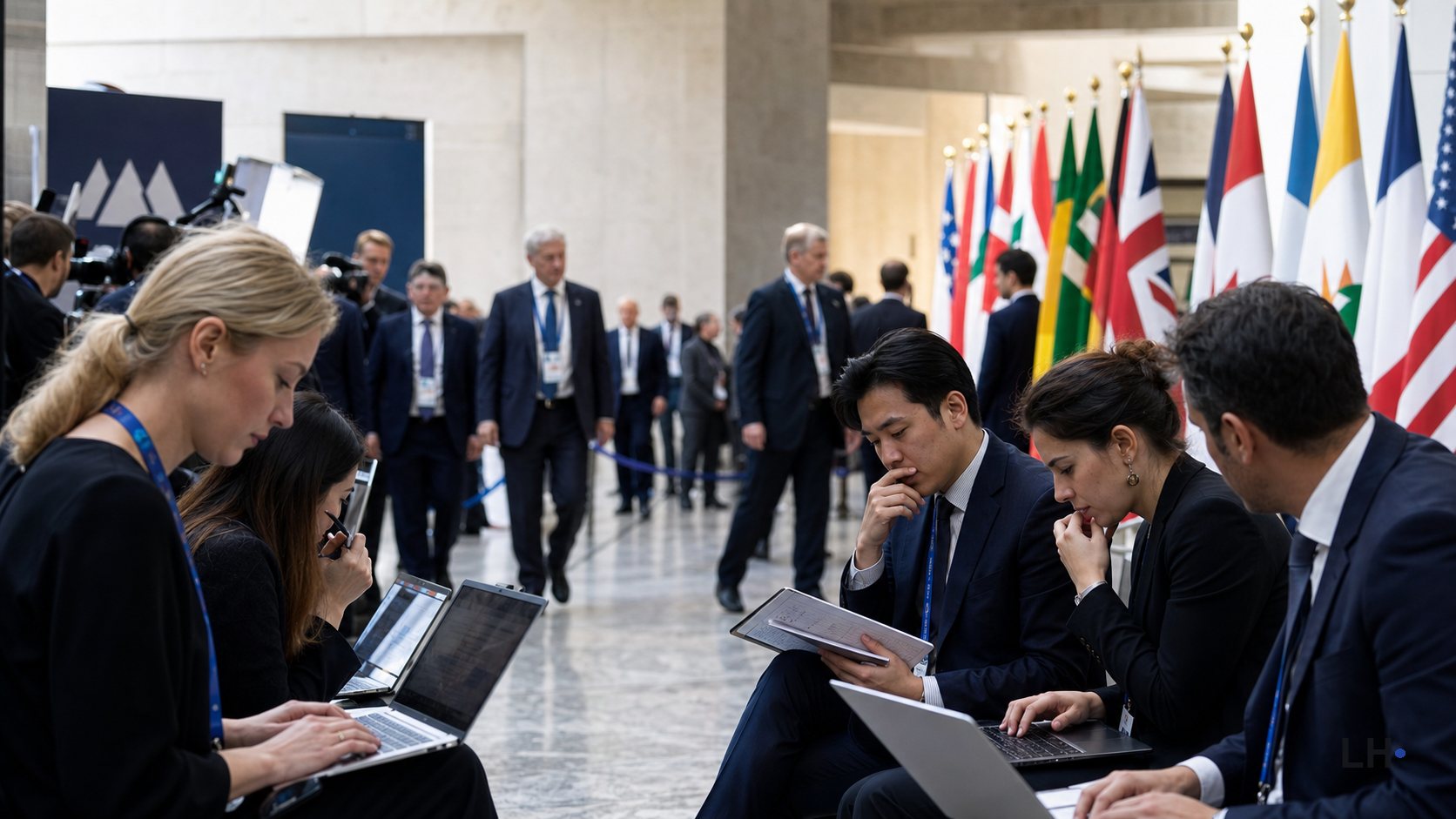
Axios reported on June 20, 2026 that CEOs and senior AI leaders from companies including OpenAI, Google DeepMind, Anthropic, Meta, Mistral, and others joined heads of state at the 2026 G7 summit in Evian-les-Bains for closed-door AI discussions. Official G7 pages confirm that France involved the private tech sector in digital and AI regulation and innovation work, and that G7 members are working with leading companies on safe and beneficial AI deployment. The specific room dynamics and quoted remarks are reported by Axios and Politico/Business Insider, not published in a full official transcript cited here. Readers should notice the shift because AI companies increasingly sit near decisions about access, standards, security, and national policy.
A careful read of available sources, not a verdict. Open the original materials when details matter.
What changed
AI leaders were pulled into G7-level AI talks
Axios reports that major AI company figures sat with heads of state during G7 discussions about AI governance, security, standards, and democratic coordination.
Why people noticed
The room showed a new kind of influence
Governments still make public rules, but frontier AI companies control systems, infrastructure, and deployment choices that governments now treat as strategic.
Important boundary
Closed-door details come from reporting
Official G7 pages support the broader AI and private-sector frame. The named CEO dynamics and remarks should be read as reported by Axios and Politico/Business Insider.
What happened
Axios reports AI company leaders joined heads of state at the G7 table
Axios reports that CEOs and senior leaders from major AI companies joined G7 heads of state in Evian-les-Bains for closed-door AI discussions during the 2026 summit.
The official G7 record supports the wider setting. The G7 site says the summit took place from June 15 to 17, 2026, and the outcomes page says France involved the private tech sector in exchanges on digital and AI regulation and innovation.
The outcomes page also says G7 members are working with leading companies to accelerate safe and beneficial AI deployment for society. That official language does not name every company or reproduce the closed-door lunch remarks, so this article keeps the named participant and quote details tied to reporting.
Why it matters
The named AI companies make the story bigger than one lunch
Axios named OpenAI, Google DeepMind, Anthropic, Meta, Mistral, Salesforce, and other AI leaders in its account of the summit scene. Politico reporting republished by Business Insider said the lunch included Anthropic CEO Dario Amodei, OpenAI CEO Sam Altman, Google DeepMind CEO Demis Hassabis, and Mistral CEO Arthur Mensch.
Those names matter because these companies are not only selling apps. They operate frontier models, developer platforms, research labs, infrastructure partnerships, and policy teams that can shape how AI is tested, restricted, deployed, and explained.
A government can set rules. A model lab can decide what capabilities ship, who can access them, what safety tests are published, what tools are integrated, and how fast a product changes. When those two kinds of power meet in the same room, AI governance becomes much less abstract.
What to watch
The official record and the reporting do different jobs
The official G7 pages confirm the summit, the digital and AI priority, the private tech-sector involvement, and the broad goal of safe and beneficial AI deployment.
Axios and Politico/Business Insider provide the more specific account of the CEO lunch, the named participants, the room dynamics, and the reported remarks. Axios says the working lunch was closed to the press and that it confirmed key remarks by Altman, Amodei, and Hassabis.
That distinction is important. The strongest official material confirms that AI and private tech engagement were part of the G7. The more vivid claims about how the room felt and what individual CEOs said should be read as reputable reporting, not as a transcript published by the G7.
Important boundary
A seat at the table is not the same as public authority
The cautious way to read the story is not that AI CEOs now govern like elected leaders. They do not have the legal authority of states, and the sources cited here do not say they were making binding G7 decisions.
The shift is subtler and still important. Frontier AI companies increasingly hold technical systems that governments see as economic, security, and sovereignty infrastructure. That gives their leaders unusual access to policy discussions, even while elected governments remain responsible for public decisions.
For readers, the concern is not personality drama around individual executives. It is whether decisions about AI standards, access, safety testing, model availability, and national security become easier or harder to inspect when they happen through closed-door cooperation between states and private labs.
What to watch
AI governance can change the tools people rely on
This kind of summit story can feel distant from everyday AI use, but the downstream effects can reach ordinary workflows.
International standards can affect how models are tested and documented. Security decisions can affect who gets access to advanced capabilities. Child-safety and content-provenance discussions can change product defaults. Sovereignty arguments can affect where models are hosted, who can use them, and what data or features move across borders.
The same pattern reaches user control. People and teams using AI seriously should keep important work, prompts, files, decisions, and source notes in places they can review and move if a provider, policy, country rule, or model changes.
What remains unclear
The next public details matter
The reporting points to interest in standards, democratic coordination, and forums for AI governance, but it does not show a finished institutional design.
The available details still leave several gaps, including the full participant list, the complete agenda of the closed-door lunch, whether a new standards body or forum will emerge, how non-G7 countries will be represented, and how civil society will inspect decisions shaped with frontier AI companies.
Those gaps are worth watching. The presence of AI CEOs at the G7 is notable; the durable test is whether future governance work becomes clearer, more accountable, and easier for users, builders, and smaller countries to understand.
LifeHubber take
Watch who helps write the AI rules
AI governance is no longer only a lab memo, a model card, or a regulatory hearing. It is becoming a high-level negotiation between governments and companies that hold much of the technical capacity.
That does not make AI companies equivalent to governments. It does mean the companies building frontier systems are increasingly treated as strategic actors whose choices can affect national policy and everyday access.
For AI users and builders, the steady habit is to follow both sides of the table. Read the official rules, read the company claims, keep your own work inspectable, and notice when product access depends on decisions made far from the chat window.
AI Radar note
How to read this article
AI Radar is LifeHubber's careful reading of available reporting and source material, not professional advice or a final verdict. Details can change, sources can update, and meaning may vary by product, organization, or location. Open the original materials and seek qualified advice where needed.
Source links
Sources and reporting
Source links are provided so readers can check the official G7 material and the reporting directly. Official pages confirm the summit timing, AI and digital priorities, and private tech-sector involvement. Axios and Politico/Business Insider carry the named participant, room dynamic, and closed-door quote details; this article treats those as reported details, not independently verified transcript facts.
Axios - New global order: AI CEOs as heads of nation-states
G7 Evian 2026 - The outcomes of the Evian G7 Summit
Business Insider - Anthropic CEO Dario Amodei and Sam Altman attend same lunch at G7
G7 Evian 2026 - Leaders call on a safer digital space for minors
G7 Evian 2026 - Digital ministers roadmap for trustworthy AI and digital policy