Choose theme
AI Radar
OpenAI's Ona Acquisition Plan Turns Codex Into a Workspace Question
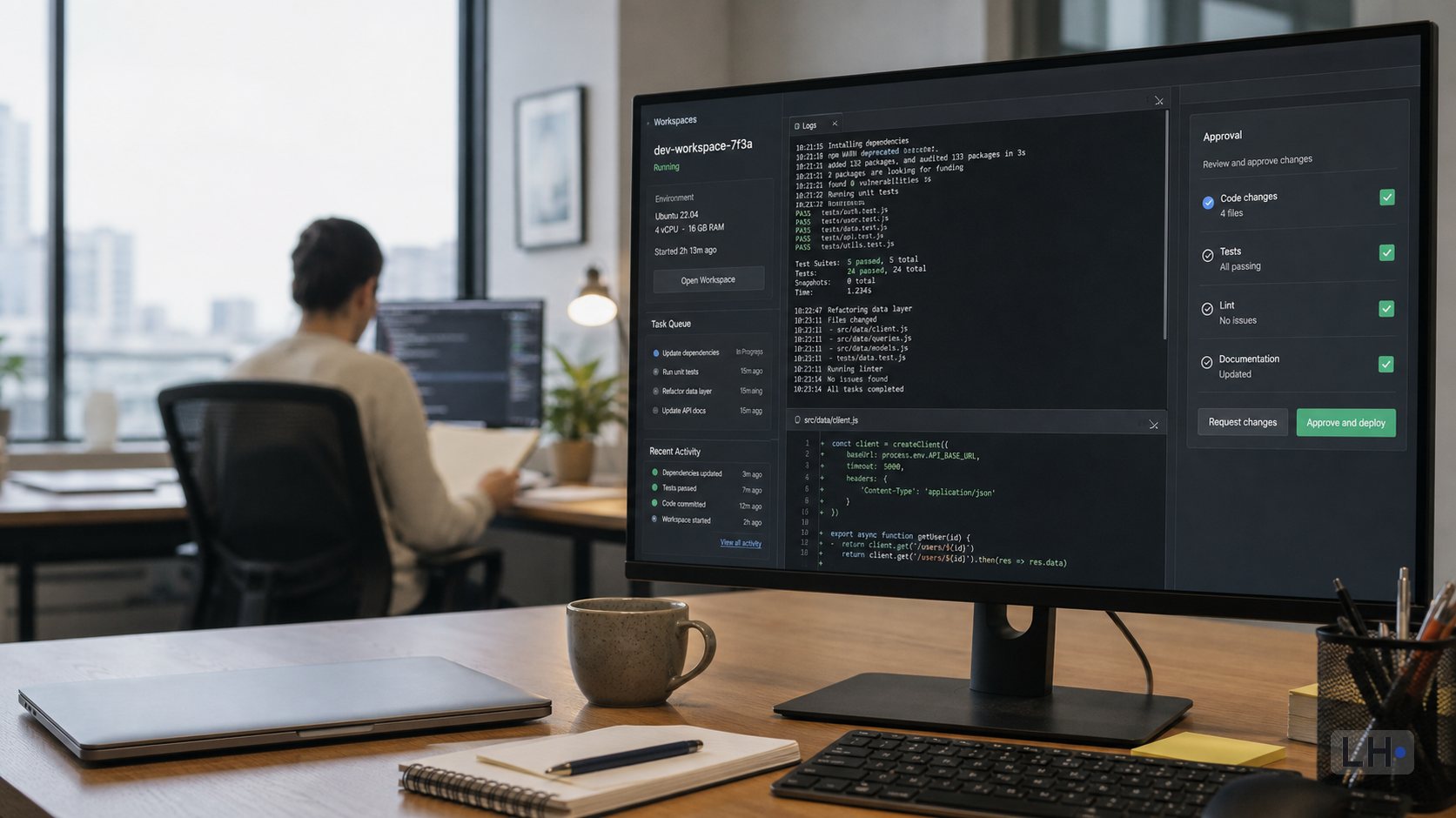
OpenAI says it will acquire Ona and bring Ona's secure cloud execution and orchestration technology into Codex. The company frames the move around longer-running agent work that can continue over hours or days, including persistent customer-controlled cloud environments, scoped credentials, logs, review, and production workflow deployment. The careful boundary is important: OpenAI says the acquisition is subject to customary closing conditions and required regulatory approvals, and that OpenAI and Ona remain separate and independent until closing. The reader issue is not only whether Codex gets smarter. It is where the agent works, what it can access, and how humans stay in control when the work continues beyond the laptop session where it began.
A careful read of available sources, not a verdict. Open the original materials when details matter.
What changed
Agents need places to work
OpenAI is presenting Ona as infrastructure for persistent Codex environments, not as a model announcement.
Why people noticed
The laptop session may stop being the boundary
OpenAI says Codex work is increasingly unfolding over hours or days, which makes cloud execution, credentials, logs, and review part of the agent story.
What remains unclear
The deal is not closed
OpenAI says the acquisition still needs customary closing conditions and required regulatory approvals, so readers should not treat the announcement as finished integration or broad availability.
What happened
OpenAI announced a plan to acquire Ona for Codex infrastructure
OpenAI says it will acquire Ona, a company known for cloud development environments, to bring secure cloud execution and orchestration technology into Codex.
The announcement is framed around Codex moving beyond work tied to a single device or active session. OpenAI says more valuable Codex work is beginning to unfold over hours or days, while users still need ways to check progress, steer the work, make decisions, and review results.
The announcement is still conditional. OpenAI says the acquisition is subject to customary closing conditions, including required regulatory approvals, and that the two companies remain separate and independent until closing.
Why people noticed
The agent race is shifting from model brains to execution environments
A coding agent that only answers inside a chat window has one kind of trust problem. A coding agent that can keep working inside a cloud environment after the original session ends has a different one.
OpenAI's framing puts the workspace itself at the center: where the agent runs, what tools and systems it can reach, how credentials are scoped, what gets logged, and how the work moves through review.
That is why this announcement matters beyond the specific acquisition. It shows that the next phase of coding agents may depend as much on execution environments and governance layers as on model capability.
Why it matters
OpenAI is framing customer-controlled environments as the enterprise answer
OpenAI says Ona's customer-controlled execution model will let agents operate inside an organization's own cloud environment while OpenAI provides the intelligence and orchestration behind the experience.
That framing matters because enterprise agent work is usually not only about generating code. It can involve repositories, tests, issue trackers, deployment systems, secrets, logs, approvals, and internal data boundaries.
LifeHubber is treating those points as OpenAI's stated product direction, not as independent proof that every deployment will be simple, open to every customer, or appropriate for every organization.
What to watch
Long-running agents make credentials, logs, and review harder to ignore
When an agent acts for minutes, a user can often watch and interrupt. When work stretches across hours or days, the control surface changes.
The practical questions become ordinary but serious: which credentials does the agent use, how narrow are they, what context is copied into the environment, what logs remain, who reviews changes, and what happens when the agent needs more authority than it started with?
Those are not only security-team questions. They are product-design questions for anyone trying to make agent work feel useful without making the work invisible.
What remains unclear
Closing, availability, and real-world controls still need watching
The acquisition has not closed. The announcement does not settle timing, packaging, pricing, customer eligibility, deployment details, migration paths, or how much of Ona's current technology will appear in future Codex surfaces.
It also does not prove that persistent agent environments are automatically easy to govern. The quality of permission design, logging, review, rollback, provider boundaries, and organization-specific policy will still matter.
Readers should treat the announcement as a direction-of-travel signal, not as investment advice, procurement advice, legal advice, or a promise about current Codex feature access.
LifeHubber take
The boundary is becoming part of the product
AI coding agents are becoming less like short assistant sessions and more like delegated workspaces.
That makes the old question, "Which model is smarter?", incomplete. For persistent agents, the question also becomes: where does it run, what can it touch, what record does it leave, and when does a human approve the next step?
OpenAI's Ona plan points toward that future. The details still need to arrive, and the acquisition still needs to close, but the strategic direction is clear enough to watch: agent infrastructure and agent governance are now part of the Codex story.
AI Radar note
How to read this article
AI Radar is LifeHubber's careful reading of available reporting and source material, not professional advice or a final verdict. Details can change, sources can update, and meaning may vary by product, organization, or location. Open the original materials and seek qualified advice where needed.
Source links
Sources and reporting
Source links are provided so readers can check OpenAI's announcement directly. LifeHubber is preserving the closing-condition caveat and treating customer-control, security, and deployment claims as OpenAI's framing, not as professional advice or independent verification.
What to explore next
How persistent agent workspaces are taking shape
Agent projects and practical permission checks show what changes when systems can act across a workspace.